Clean Your Bathroom for Just $1
20th April, 2026
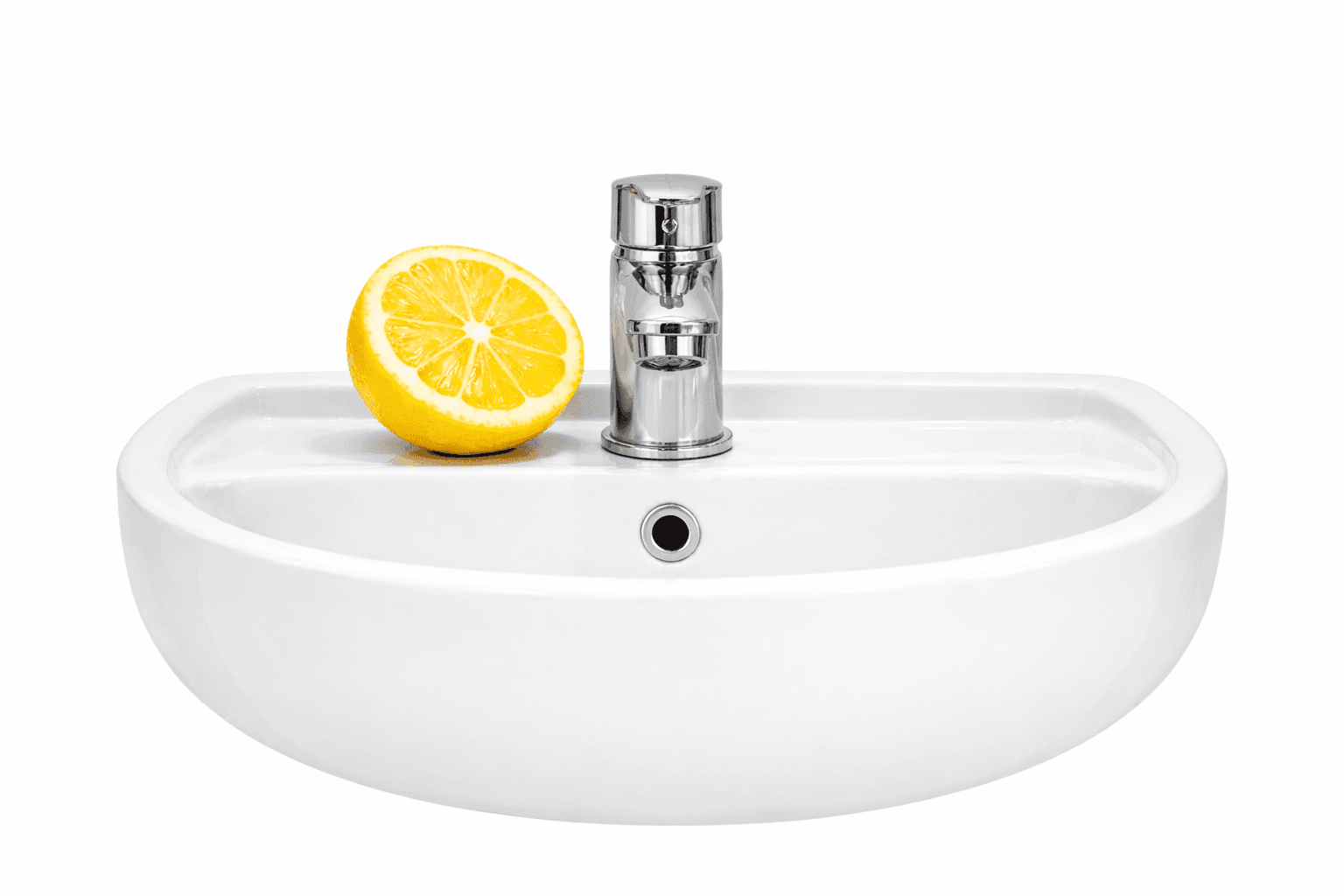
When life gives you lemons, clean your bathroom with it.
get a free Quote
Why lemon works on limescale
Limescale is mostly made of mineral deposits such as calcium carbonate. Citric acid helps because it reacts with those deposits and breaks them down into a form that is easier to wipe or rinse away.
That makes lemon useful for:
taps with white build-up,
shower glass with light mineral marks,
and small bathroom fixtures that look dull because of hard water residue.
Where lemon helps the most
Lemon works best on light to moderate limescale. It is a simple option when you want to freshen up chrome-style fixtures or shower glass and the build-up has not become extremely thick or deeply set. This is why acidic descaling methods are commonly used for hard water deposits.
What a lemon can realistically improve
A lemon can help make:
taps look brighter,
shower glass look clearer,
and small bathroom details look fresher overall.
It is not magic, and it will not restore every heavily scaled surface perfectly, but it can make a noticeable difference for very little cost. That is what makes it useful.
Where you need to be careful
Lemon is acidic, so it is not safe for every bathroom surface.
The Natural Stone Institute warns that products containing lemon, vinegar, or other acids may dull or etch calcareous stone. That includes surfaces such as marble, limestone, and travertine.
So if your bathroom has natural stone:
do not use lemon on marble,
do not use it on limestone,
and do not use it on travertine.
The simple takeaway
If your bathroom has light limescale on acid-safe surfaces, a lemon can be one of the cheapest ways to improve how it looks. For around A$1 to A$2, you can tackle fresh mineral build-up and make taps, glass, and fixtures look cleaner again.
But if the scale is heavy, old, or sitting on natural stone, a lemon is not the right answer. In those cases, use a product designed for that material instead.
get a free Quote

>
Clean Your Bathroom for Just $1
Contact us directly: Call or text us 24/7 on +61484 551 319 or Email us - blhiss.cleaning@gmail.com
Copyright © 2025 BLHISs Inc. All rights reserved.
Sitemap
Australia